

- Home
- Black steel tubing - cut to length then powder coated
Black Steel Tubing - Cut to Length Then Powder Coated
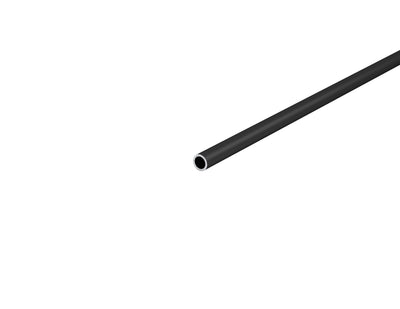
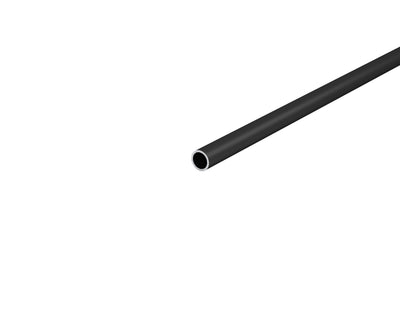
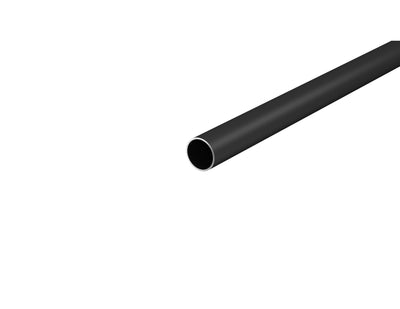
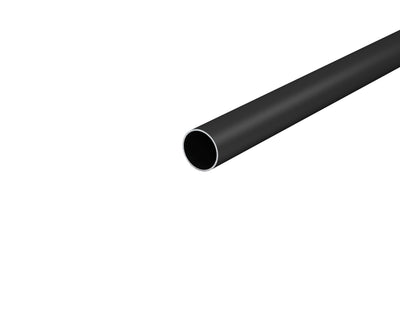
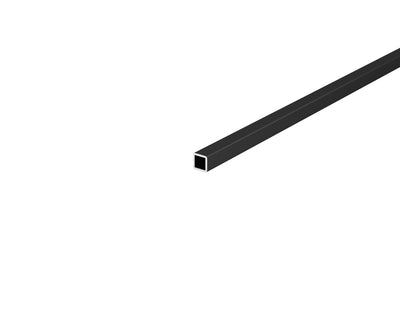
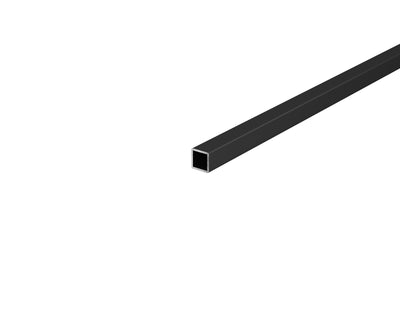
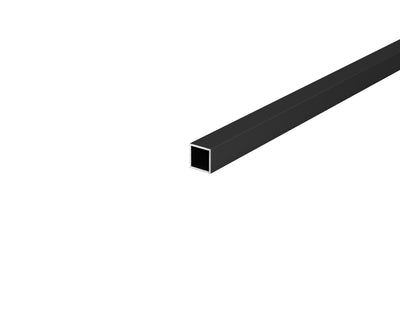
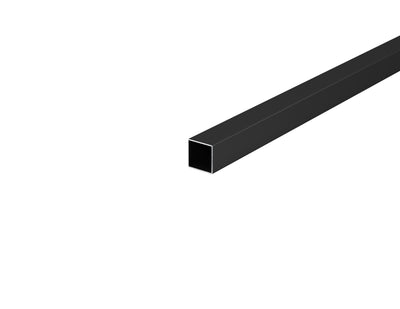
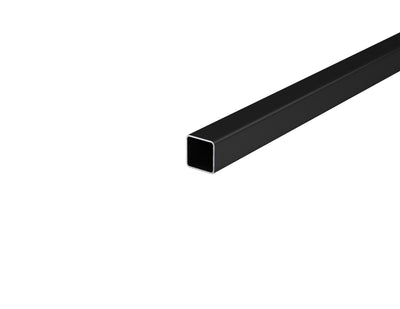
Black Pre-Finished Steel Tubing
Matte Black Powder Coated & Cut to Size
This collection features pre-finished powder coated steel tubing, cut to your specified length and ready to use right out of the box. All tubing is cut and powder coated in house by Testrite, giving you the strength of steel with a durable, professional finish—without the delays and complexity of outsourcing finishing.
We offer both round and square black steel tubing, making this collection ideal for retail fixtures, displays, signage, frames, architectural elements, and fabricated components where appearance matters as much as performance.
This wholesale tubing is available direct from Testrite. Volume pricing is built right into our website, so the more you buy, the lower the price per tube.
What’s Included in This Collection
• Round powder coated steel tubing in multiple diameters and wall thicknesses
• Square powder coated steel tubing for frames, uprights, and structural layouts
• Matte black powder coat as a standard stocked finish
• Custom cut-to-length tubing, accurate to ±1/16"
All tubing is cut to size prior to powder coating, ensuring fully finished ends and a consistent appearance from end to end.
Built for Real-World Use
Raw steel tubing often requires additional steps—painting, coating, or plating—before it’s usable in visible applications. Our powder coated steel tubing eliminates that friction:
• Scratch- and chip-resistant finish
• Consistent color and sheen across runs
• Improved corrosion resistance versus raw steel
• Clean, professional appearance for customer-facing environments
Frequently Asked Questions
What Is Steel Tube And How Is It Used In Fabrication?
What Is Steel Tube And How Is It Used In Fabrication?
Steel tube is a hollow steel round or hollow steel square shape manufactured to a given length. This provides strength, rigidity, and connection flexibility within fabricated assemblies. Steel tube offers great strength with less weight than a solid, making it suitable for frameworks, modular systems, and reinforcement applications. Fabricators select steel tube based on profile geometry, wall thickness, and dimensional consistency to ensure compatibility with fastening hardware and adjoining components.
Common Fabrication Applications
Steel tube is frequently used as display uprights, frame construction, support structures, modular display systems, and industrial assemblies. Square and round profiles allow consistent corner alignment and straightforward connection integration. Steel is able to support weight than aluminum while also offering more rigidity.
Steel tubing is also used in perimeter framing where connection precision directly affects overall assembly stability. Consistent outer dimensions allow brackets and caps to seat correctly without forcing or modification.
Integration With Connection Hardware
Steel tube systems rely on compatible hardware to maintain rigidity at intersections and transitions. For square configurations, corner and reinforcement brackets provide secure right-angle connections. Components such as the charisma steel 90° corner bracket are engineered to reinforce tubing junctions while preserving alignment.
Proper integration between tube dimensions and connection hardware ensures predictable assembly performance. Selecting tubing and hardware together reduces field modification and supports repeatable fabrication workflows.
When Should You Choose Steel Square Tubing Over Other Profiles?
When Should You Choose Steel Square Tubing Over Other Profiles?
Steel square tubing is often selected when strength and rigidity are more important than having the lightest weight option. The uniform sides of a square profile allow predictable alignment at corners and intersections, making it a practical choice for frames, modular assemblies, and structural support systems. Fabricators frequently choose square tubing when consistency and alignment across multiple connection points is critical to overall assembly stability.
Structural Advantages Of Square Profiles
The flat exterior surfaces of steel square tubing simplify bracket placement and fastening alignment. Compared to round profiles, square tubing provides clear reference planes, which can improve precision during layout and installation. This makes it particularly suitable for frameworks that require repeatable right-angle joints and evenly distributed load paths.
Square tubing also performs well in compression and bending applications within non-building structural assemblies. Its geometry supports predictable performance when paired with compatible reinforcement hardware and properly selected wall thickness.
Compatible Reinforcement And Cap Components
Steel square tubing is commonly integrated with reinforcement brackets and protective end components to improve durability and joint stability. For example, the steel universal L bracket for 1" tubing can reinforce right-angle connections in square frameworks. Straight-line reinforcement can be achieved using the steel universal straight bracket for tubing, which helps maintain alignment across linear spans.
To finish exposed ends and improve structural presentation, fabricators may incorporate a steel corner cap for 1" square tubing system. Coordinating tubing dimensions with compatible reinforcement hardware supports repeatable assembly performance and reduces modification during installation.
Precision In Modular Systems
In modular systems where components are assembled and disassembled repeatedly, dimensional precision becomes even more important. Steel square tubing provides consistent outer dimensions that allow brackets and caps to seat properly without excessive tolerance gaps. This predictability supports faster installation and more consistent joint alignment across multiple builds.
For production environments managing repeat configurations, maintaining the same square tubing specifications across projects can reduce setup time and simplify inventory planning. Standardization improves efficiency while preserving structural consistency throughout the system.
How Is Steel Rectangular Tubing Used In Frame Construction?
How Is Steel Rectangular Tubing Used In Frame Construction?
Steel rectangular tubing is commonly used in frame construction where directional strength and efficient load distribution are required. Its longer side dimension provides increased resistance along one axis, making it suitable for horizontal spans, perimeter framing, and base structures. Fabricators often select rectangular profiles when a project requires greater stiffness in one direction while maintaining a relatively low overall profile height.
Load Distribution And Span Considerations
The geometry of steel rectangular tubing allows it to perform effectively in applications where loads are primarily applied along the longer face. This makes it useful for support rails, base frames, and structural outlines in modular systems. By orienting the longer side strategically, builders can optimize bending resistance without significantly increasing material weight.
When designing frames, span length and connection placement directly affect overall rigidity. Rectangular tubing can help distribute stress more evenly across longer runs when properly supported at connection points and intersections.
Connection Strategies For Rectangular Profiles
Connection planning is critical when integrating steel rectangular tubing into larger assemblies. Because rectangular profiles feature flat surfaces, they can accommodate bracketed joints and mechanical fasteners with predictable alignment. Ensuring dimensional compatibility between tubing and reinforcement hardware reduces adjustment during installation.
Fabricators often reinforce straight runs using compatible hardware to maintain alignment across extended spans. Properly selected connection components help maintain joint stability and reduce deflection at load points. Matching tubing dimensions with reinforcement accessories supports efficient assembly and repeatable construction performance.
Profile Orientation And Structural Efficiency
Orientation plays a significant role in how steel rectangular tubing performs within a structure. Positioning the longer face vertically can increase resistance to bending in certain span configurations, while horizontal placement may support different load distributions. Understanding how orientation affects stiffness allows designers to maximize structural efficiency without increasing wall thickness unnecessarily.
By evaluating both profile geometry and placement strategy, fabricators can achieve stronger assemblies while maintaining material efficiency. Strategic orientation supports performance goals while preserving manageable weight and installation practicality.
What Applications Are Best Suited For Steel Round Tubing?
What Applications Are Best Suited For Steel Round Tubing?
Steel round tubing is commonly used in applications where uniform load distribution and multi-directional strength are required. Its circular profile allows stress to be dispersed evenly around the outer wall, which can improve performance in compression and bending scenarios. Fabricators often select steel round tubing for systems that require smooth rotation, telescoping functionality, or a clean visual profile.
Strength And Load Distribution Characteristics
The circular geometry of steel round tubing provides consistent resistance from all directions, making it suitable for vertical supports, crossbars, and bracing elements. Unlike square or rectangular profiles, round tubing does not favor one axis over another, which can simplify orientation during installation. This uniformity is beneficial in assemblies where forces may shift or where components are repositioned over time.
Round profiles also tend to present fewer stress concentration points at corners, which can support durability in repetitive-use systems. When properly matched with compatible wall thickness, steel round tubing can provide reliable behavior in modular frameworks and reinforced assemblies.
Adjustable And Telescoping Uses
Steel round tubing is frequently used in adjustable systems where one tube slides inside another. This configuration allows controlled height or length modification while maintaining structural continuity. Locking mechanisms such as spring buttons can secure telescoping sections at predetermined positions to prevent unintended movement.
In modular assemblies, round tubing may also be used in conjunction with connection hardware to create flexible, repeatable builds. Ensuring dimensional compatibility between outer diameter and internal components supports smoother adjustment and consistent performance over time.
Surface Finish And Corrosion Considerations
Surface condition plays an important role in both performance and longevity. Steel round tubing may be supplied in finishes that support corrosion resistance, surface durability, or visual consistency within exposed applications. Selecting an appropriate finish can help protect tubing from environmental exposure, particularly in systems that are transported, installed, and reconfigured frequently.
If you want to buy round steel tubing, you can buy it cut to size and then powder coated. This ensures edges are finished, providing you a pre-finished material to integrate into your design.
Why buy powder coated steel tubing?
Why buy powder coated steel tubing?
If you buy a raw steel tube and do not finish it, the raw steel will likely be oily and it will rust. The rust will look bad, and the tube itself will corrode away. You'll be able to see the corrosion take place over time.
Powder coating is a multi-step process. We first clean the tubes with an environmentally friendly chemistry before drying them off and then powder coating them. The powder serves to protect the underlying steel tube from exposure to elements that would speed up corrosion, helping to slow down the corrosion process. Just as importantly, powder coating offers an attractive finish, so you receive nicely finished black tubes, not an oily rusty looking raw material.
Testrite cuts to size before powder coating, so not only is the main body of the tube powder coated, but the ends are as well. Just be aware, to powder coat, we have to hang the parts on our line, so there will be one small hole for short tubes, and 2 small holes for longer tubes that we use to hang the parts.
Why Does Steel Tubing Thickness Matter In Structural Design?
Why Does Steel Tubing Thickness Matter In Structural Design?
Steel tubing thickness plays a critical role in determining rigidity, load capacity, and long-term durability within fabricated assemblies. Wall thickness influences how tubing performs under compression, bending, and torsional forces. Selecting appropriate steel tubing thickness ensures that a structure maintains alignment and stability without introducing unnecessary weight or material cost.
Wall Thickness And Load Capacity
Thicker wall sections generally provide increased resistance to deformation under load. In frame construction and modular systems, adequate wall thickness helps reduce deflection across spans and improves joint stability at connection points. When tubing is subjected to repeated stress or dynamic movement, selecting sufficient thickness can support longer service life and more predictable performance.
However, greater thickness also increases overall weight. Designers must balance strength requirements with handling efficiency and installation practicality. Choosing thickness based on actual load conditions rather than assumptions helps optimize both structural reliability and material usage.
Gauge Versus Measured Thickness
Steel tubing thickness may be referenced by gauge or by direct measurement in inches or millimeters. Gauge systems can vary depending on manufacturing standards, so it is important to confirm actual wall thickness when specifying material. Relying solely on gauge designation without reviewing measured dimensions may lead to mismatched expectations during fabrication.
Verifying measured thickness supports compatibility with fastening methods, drilled holes, and internal hardware components. Precision in specification reduces rework and supports smoother assembly workflows.
Application-Based Thickness Selection
Different fabrication scenarios demand different thickness levels. Lightweight display systems may require thinner walls to reduce transport weight, while reinforcement elements in load-bearing frames may call for thicker profiles. Evaluating span length, connection type, and expected force exposure helps determine appropriate thickness selection.
By standardizing steel tubing thickness across repeat builds where possible, fabricators can streamline purchasing, tooling adjustments, and installation processes. Clear thickness specification contributes to consistent structural behavior and predictable fabrication outcomes.
We offer thin wall steel tubing, which prioritizes economy and lightweight over structure strength.